
The best LGBT pride quotes are the ones that carry a real person’s words and a real history, and the ten below do exactly that. They come from Harvey Milk, Marsha P. Johnson, Audre Lorde, Gilbert Baker, James Baldwin, Sylvia Rivera, Lady Gaga, Edie Windsor, RuPaul, and Laverne Cox. Each works on a shirt, a tote bag, a pin, a banner, or a post, and each comes with an idea for how to wear it.
Why does attribution matter so much? Because a quote only carries weight when it’s accurate. Pride slogans get shared, shortened, and misattributed constantly, and putting the wrong name on someone’s words erases the very people we’re trying to honor. So we’ve kept to words that can be traced to a speaker, and we’ve said so plainly.
You’ll also find styling guidance that takes safety seriously. Not everyone can wear a bold statement everywhere, and that’s a reasonable choice, never a failure of pride. Whether you want a loud slogan or a quiet reminder tucked inside a jacket, there’s something here that fits where you are and what feels right.
How These Pride Quotes Were Chosen for Fashion
This is a curated list, not a product test, so nothing here was bought, worn, or rated. Instead, each quote was weighed against a handful of questions about whether it deserves a place on your chest, your tote, or your jacket back. Here’s what mattered:
- It traces to a verifiable source, such as a speech, essay, interview, or song.
- It affirms and empowers rather than leaning on a worn-out slogan.
- It’s short enough to read at a glance on a tee, pin, or patch.
- It’s rooted in LGBTQ+ history and activism, not just aesthetics.
- It speaks across the community, with lesbian, gay, bi, trans, nonbinary, queer, intersex, and asexual voices all in view.
That last point matters to us. Pride has always been built by many hands, and the words we choose to wear should reflect that. Some of the people quoted here, especially trans women of color, shaped the movement long before fashion brands noticed it.
One practical caution before you order anything. Pride quotes are among the most misattributed lines online, and a lovely sentence floating beside a famous name isn’t proof the person ever said it. If you plan to print a quote on a shirt, a mug, or a banner, take a few minutes to trace it to its original source first. Check a book, a recorded speech, or a reputable archive. It’s a small step, and it honors the people whose words you’re carrying.
The Quotes: 10 Pride Lines That Work as Wearable Statements
1. Harvey Milk, “You Gotta Give ‘Em Hope”
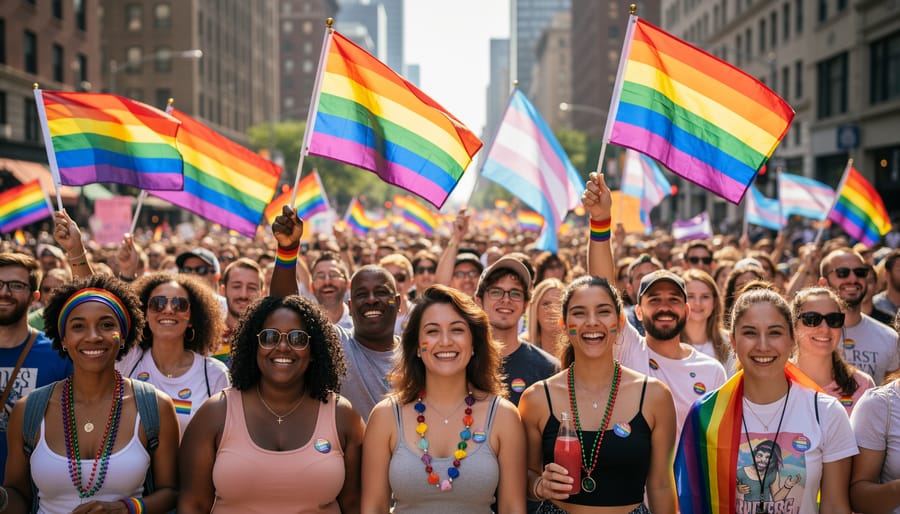
Harvey Milk used some version of this line again and again in his speeches during his time as a San Francisco city supervisor in the late 1970s. He was one of the first openly gay men elected to public office in California, and he understood that people living in fear needed more than policy. They needed a reason to keep going. Hope was that reason.
That’s why it works so well on a tee or pin. Three short words, no explanation required. Try plain black lettering on a classic white tee, set in a clean sans-serif with generous spacing. Let the words do the talking.
2. Marsha P. Johnson, “No Pride for Some of Us Without Liberation for All of Us”
The line “No pride for some of us without liberation for all of us” is widely credited to Marsha P. Johnson, a Black trans woman, Stonewall-era activist, and co-founder of STAR (Street Transvestite Action Revolutionaries) alongside Sylvia Rivera. She spent her life caring for homeless and gender-nonconforming youth in New York, and the words reflect that work. Many sources attribute the phrase to her, though it’s worth confirming the wording and source before you print it on anything.
It’s a natural fit for a jacket back patch or an embroidered denim panel, where a bold statement can sit large and visible. Wearing it also means crediting the trans women of color whose organizing helped build the Pride we celebrate today.
3. Audre Lorde, “I Am Deliberate and Afraid of Nothing”
Audre Lorde called herself a Black, lesbian, mother, warrior, poet, and that refusal to shrink herself runs through everything she wrote. The line comes from her 1978 poem “A Litany for Survival,” which is about living with fear and choosing to speak anyway. That’s why it hits so hard on fabric: it reads as a declaration, not a slogan.
Try it stitched in bold block letters across the back of a denim jacket, or embroidered in thread along the front of a canvas tote. The texture of hand-stitching suits words this deliberate. Choose a single contrasting thread color and let the quote do the talking.
4. Gilbert Baker and the Rainbow Flag’s Message of Hope
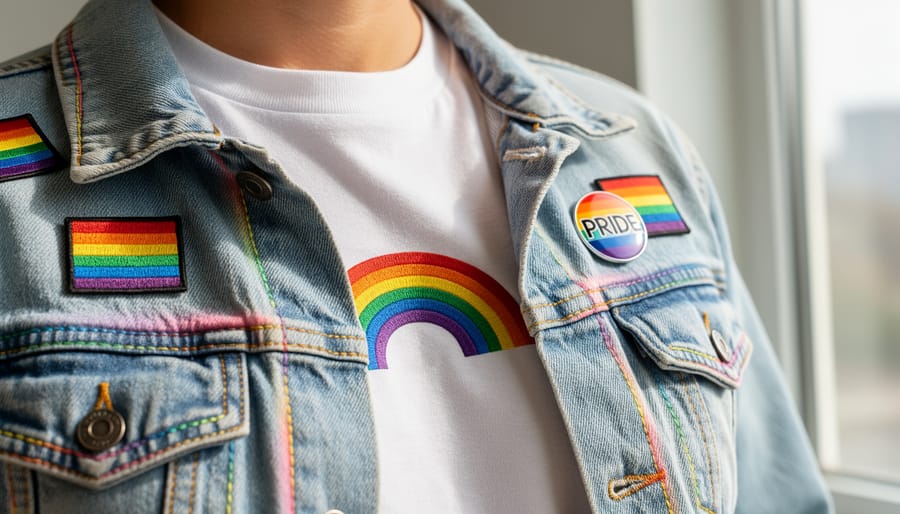
Gilbert Baker designed the first rainbow flag for San Francisco’s 1978 Pride celebration, and he was clear about what it meant. He described the flag as a symbol that declared, in his words, “I am a human being” and called it an expression of joy and hope. Baker saw color itself as a language, and each stripe carried its own meaning, from life and healing to spirit.
That makes the flag a natural guide for Pride fashion. A color-blocked scarf, a striped tote, or a rainbow enamel pin says what Baker intended without a single word. For a gentle styling twist, pair a rainbow-palette accessory with a short caption, like “Hope,” stitched small or printed on a tag.
5. James Baldwin on Love and Freedom
James Baldwin wrote about love as a kind of courage. In The Fire Next Time, he described love as “a state of being, or a state of grace,” something closer to daring than to comfort. A verified line from that same work, “Love takes off the masks that we fear we cannot live without and know we cannot live within,” speaks to anyone who has spent years carrying a version of themselves for other people’s comfort.
Baldwin, a gay Black writer, explored these themes across his essays and novels, including Giovanni’s Room. For wearing it, try small-print text inside a jacket lining or along the cover of a journal. It stays private until you decide to open it.
6. Sylvia Rivera’s Call for Visibility and Inclusion
Sylvia Rivera spent her life insisting that the movement make room for everyone, especially the people it was quickly leaving behind. A Latina trans activist and Stonewall-era veteran, she co-founded STAR (Street Transvestite Action Revolutionaries) with Marsha P. Johnson in 1970, offering housing and support to homeless and gender-nonconforming youth. Because her recorded words come from speeches and interviews, quote exact lines only from sources you’ve checked, and credit her by name.
Her message of inclusion suits a protest-style patch or button. Pin a small one to a denim jacket or tote, or sew a patch on a backpack strap. Keep the wording short and the credit visible, so the history travels with it.
7. Lady Gaga, “Baby, I Was Born This Way”
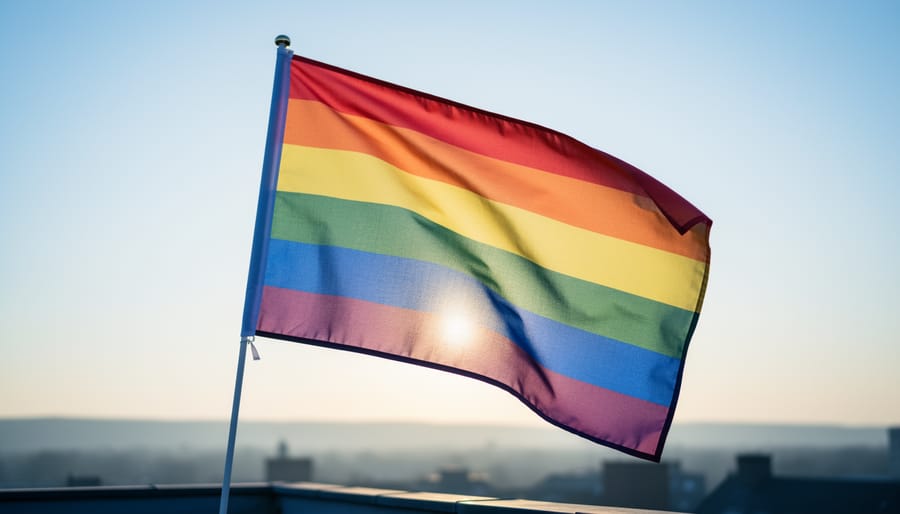
“Baby, I was born this way” comes from Lady Gaga’s 2011 anthem “Born This Way,” and it became a Pride staple almost overnight. The song’s message of self-acceptance landed at parades, in classrooms, and on dance floors, and the line has been a fixture ever since.
For fashion, it’s one of the easiest choices on this list. People recognize it instantly, so it works on a bright tee, a sparkly tote, or a hand-lettered denim jacket. It also reminds us that Pride isn’t only solemn. Joy, glitter, and a good singalong are part of the movement too, and wearing this lyric is a cheerful way to join in.
8. Edie Windsor and the Fight for Marriage Equality
Edie Windsor became the face of marriage equality when she sued the federal government after being taxed on the estate of her wife, Thea Spyer. Her case, United States v. Windsor, led the Supreme Court in 2013 to strike down a key part of the Defense of Marriage Act. Windsor kept her message simple: she wanted her marriage treated as equal to anyone else’s. Rather than quote her from memory, check a primary source, like her court filings or a documented interview, before printing any line on a product.
Her story suits love-centered Pride fashion. Try coordinated accessories for couples, such as matching enamel pins or a pair of bracelets in the same rainbow palette, with her name or a short line of hers on the back.
9. RuPaul, “We’re All Born Naked and the Rest Is Drag”
RuPaul has repeated this line across interviews, his memoir, and nearly every season of Drag Race, so the attribution is solid. The idea underneath it is freeing: who you are comes first, and everything you put on afterward is a choice, a costume, a bit of play.
That’s why it fits Pride fashion so well. A tee, a sequined jacket, a bold lip, a tote bag, they’re all ways of saying you get to decide how the world sees you. Try it in glittery script on a fitted tee, or as a bright enamel pin on a denim lapel. It’s the lightest quote on this list, and that joy is part of the point.
10. Laverne Cox on Being Your Authentic Self
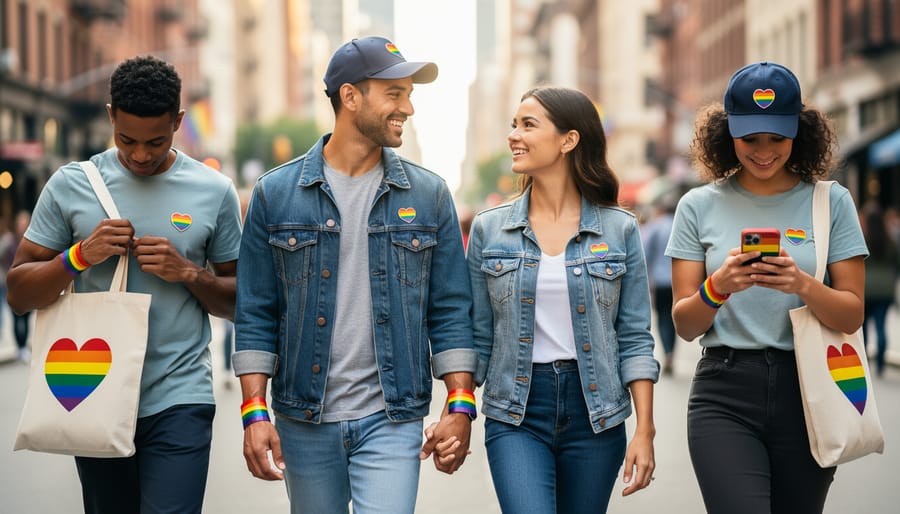
Laverne Cox has said, “It is revolutionary for any trans person to choose to be seen and visible in a world that tells us we should not exist.” She spoke those words in the context of her advocacy for trans visibility, and they carry weight because they name something real: being seen is a choice, and for many people it takes courage.
On a statement tee, bold typography lets the line speak plainly. Try clean block letters in a single color, or a rainbow gradient if you want the joy to show too.
Of all ten quotes, only you know which feels most true. Choose the one you’d wear on your hardest day and your happiest one.
Wearing Your Words Safely and Respectfully
Picking a quote is only half the decision. The other half is deciding who gets to see it, and that choice belongs entirely to you. If you’re figuring out what to wear to Pride comfort and safety deserve as much thought as style.
In some towns, workplaces, and families, a bold slogan on a tee can invite unwanted attention or worse. That’s a real consideration, not a failure of courage.
You can also treat certain spaces differently. Maybe the Marsha P. Johnson line goes on a back patch you wear only at Pride events or at a friend’s place, while a Harvey Milk line lives on a pin tucked under a lapel. The words still belong to you wherever they sit.
When you do buy, it’s worth looking for LGBTQ+-owned makers and brands that give back. Many donate a share of sales to community organizations, including groups that support LGBTQ+ asylum seekers and refugees, so your purchase can reach people who are rebuilding their lives somewhere safer.
For a designer’s perspective, it would be valuable to include a short quote from an LGBTQ+ maker or advocate on how people can express pride without exposing themselves. Whoever shares it, the takeaway is likely the same: the most meaningful piece is the one that feels right on you, in the spaces where you choose to wear it.
Pride Quote Fashion Questions, Answered
Quick answers to the questions readers ask most often about wearing pride quotes.
How do I verify a quote’s source before printing it?
Look for the original speech, book, interview, or song, not a quote graphic or a “famous quotes” site. If you can’t trace it to a primary source, treat it as unverified and choose another line.
Can I print someone else’s quote on merchandise I sell?
Short quotes can still raise copyright or publicity-rights issues, especially song lyrics like “Baby, I Was Born This Way.” Check with a legal professional before selling anything, and consider licensing or crediting the source.
What are subtle ways to show Pride through fashion?
Try a small enamel pin, a quote inside a jacket lining, or a rainbow color palette without any text. These let you carry the message quietly and decide when and where to share it.
How can my Pride purchases support community causes?
Choose LGBTQ+-owned makers and brands that donate part of their sales to community organizations. A simple question to the seller about where proceeds go is always fair.
If you’re planning a full Pride outfit around your favorite quote, these Pride comfort tips can help you stay comfortable from the first march to the last party.
Pride fashion also connects to the wider fight for safety. Organizations that offer LGBTQ asylum support do vital work, and many LGBTQ+ refugees need more than asylum papers to build a secure life. Putting some of your Pride budget toward groups like these keeps the message on your shirt connected to real help.
Final Takeaway: Let Your Words Carry the Message
A good Pride quote is one you believe in, can attribute accurately, and feel safe wearing. Whether you pick Marsha P. Johnson’s call for liberation for all, Audre Lorde’s fearless defiance, or RuPaul’s playful reminder that clothing is self-expression, the words you choose say something true about you.
Fashion has always been part of how our community shows up for itself. It’s also part of a bigger movement for safety, dignity, and belonging, and knowing your protections matters, including your LGBTQ rights in Canada. Wear your words in whatever way feels right, and know you belong.