
Refugee challenges are the complex, interconnected obstacles that displaced people face when fleeing persecution and rebuilding their lives in a new country, from securing basic needs like housing and healthcare to overcoming language barriers, employment discrimination, and cultural adjustment. For LGBTQ refugees, these hurdles multiply. Many escape countries where their identity was criminalized, only to confront new systems that fail to recognize gender identity, dismiss trauma, or replicate the very prejudices they fled.
Understanding these challenges matters because over 100 million people worldwide are currently displaced by conflict, persecution, and violence. Refugees don’t simply arrive and start over. They navigate years-long legal processes, separation from family, and the psychological weight of leaving everything behind. The path to safety involves multiple stages, each with its own barriers: reaching a safe country, applying for asylum, surviving the waiting period, and finally attempting to integrate into an unfamiliar society.
This article breaks down what refugees actually face at each stage of resettlement. You’ll learn how the refugee process works, from initial displacement through legal status and integration. We’ll explore the specific types of challenges, including legal and bureaucratic hurdles, economic barriers, health and mental health needs, social isolation, and the compounded difficulties LGBTQ refugees experience. Whether you’re considering seeking asylum yourself, supporting someone through the process, or working in advocacy and services, this guide provides the practical context you need to understand what refugees are up against and how communities can better respond. The obstacles are real, but so are the pathways forward when people have accurate information and solidarity.
Understanding Refugee Resettlement: What It Means and Why It’s Complex
Refugee resettlement isn’t the same as simply moving to another country. It’s a formal, life-altering process that occurs when people fleeing persecution can’t safely return home or stay where they initially fled. Unlike immigrants who choose to relocate for better opportunities, refugees leave because they have no safe alternative.
To qualify as a refugee under international law, you must be outside your home country with a well-founded fear of persecution based on race, religion, nationality, political opinion, or membership in a particular social group. This last category increasingly includes LGBTQ individuals fleeing countries where their identity puts them at mortal risk. The 1951 Refugee Convention established this framework, but the reality is far messier than any legal definition suggests.
- Refugee
- A person forced to flee their country due to persecution, war, or violence, who cannot return safely and has been formally recognized under international or national law.
- Resettlement
- The permanent transfer of refugees from an asylum country to a third country that has agreed to admit them and grant them the opportunity to become residents or citizens.
- Asylum Seeker
- Someone who has applied for refugee protection and is waiting for their claim to be assessed, existing in legal limbo until a decision is made.
- Internally Displaced Person (IDP)
- Someone forced to flee their home but who remains within their country’s borders, lacking the legal protections refugees receive.
- Refugee Status Determination
- The formal process of evaluating whether someone meets the criteria to be recognized as a refugee, involving interviews, documentation review, and security checks.
Resettlement represents the most structured solution for refugees, but it’s also the rarest. The UNHCR estimates that less than 1% of refugees worldwide get resettled. Those who do face a journey that typically spans years, not months, involving multiple countries, agencies, and bureaucratic systems that often don’t communicate well with each other.
The complexity arises because resettlement asks people who’ve already lost everything to navigate unfamiliar legal systems, prove unprovable fears, and restart their lives in countries whose languages they don’t speak and whose cultures they don’t know. They’re expected to integrate quickly while carrying trauma, facing discrimination, and managing the guilt of those left behind. For LGBTQ refugees, there’s the added weight of proving an identity that may have been hidden for survival.
How Refugee Resettlement Works: The Journey from Displacement to New Home
The Role of UNHCR and Resettlement Countries
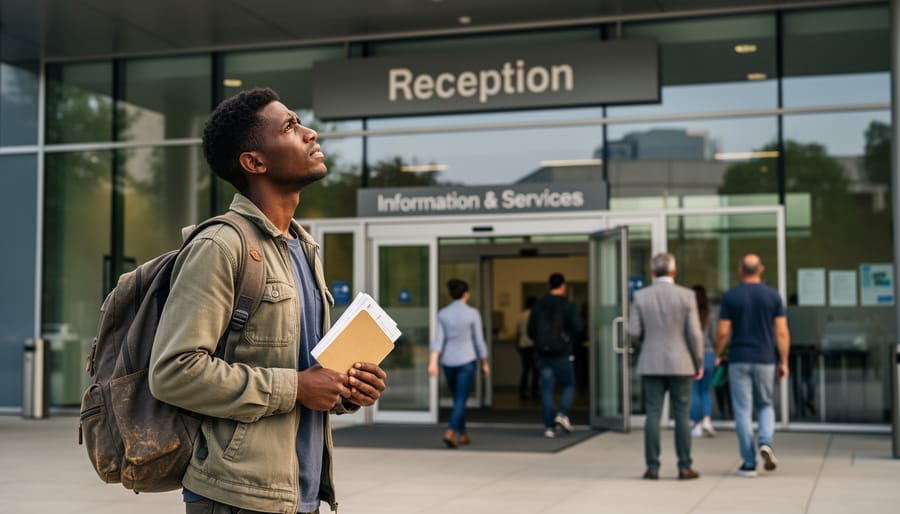
The United Nations High Commissioner for Refugees (UNHCR) identifies vulnerable refugees who cannot safely remain in their first country of asylum and UNHCR refers for resettlement to one of roughly 30 countries that accept refugees through official programs. Countries like the United States, Canada, Australia, and several European nations then review these referrals based on their own criteria, admission quotas, and capacity.
Selection isn’t random. Countries prioritize refugees facing urgent protection needs, survivors of violence or torture, those with serious medical conditions, women and children at risk, and family reunification cases. LGBTQ refugees often fall under the “vulnerable individuals” category because they face persecution based on sexual orientation or gender identity, both in their home countries and sometimes in refugee camps.
However, proving LGBTQ status to skeptical immigration officials remains a significant hurdle. Many resettlement countries lack trained personnel who understand LGBTQ experiences, leading to invasive questioning or outright disbelief. Some refugees must provide “evidence” of their identity in cultures where being openly LGBTQ was life-threatening, creating an impossible documentation burden. Even after acceptance, the wait between referral and actual resettlement can stretch years, leaving LGBTQ refugees in limbo and at continued risk.
Types of Challenges Refugees Face During Resettlement

Legal and Administrative Barriers
Refugees land in a maze of paperwork almost immediately. Birth certificates, marriage licenses, educational diplomas, and medical records, all must be translated, notarized, and submitted to multiple agencies. Many refugees fled with nothing, making it impossible to produce documents that bureaucracies demand. Without these papers, they can’t prove their identity, enroll children in school, or apply for benefits.
Immigration status adds another layer of uncertainty. Even after arrival, some refugees wait months or years for permanent residency or citizenship. This limbo prevents them from planning their future or accessing certain jobs and services. LGBTQ refugees face particular scrutiny during asylum interviews, where they must “prove” their sexual orientation or gender identity to skeptical officials, an invasive process that can retraumatize survivors of persecution.
Work authorization becomes a frustrating barrier. Employment authorization delays for refugees can stretch for months, leaving families without income despite being legally present. When work permits finally arrive, credential recognition presents another roadblock. A doctor from Syria becomes a warehouse worker because their medical degree isn’t recognized. Engineers drive rideshares. Teachers clean offices. The process to have foreign credentials evaluated and accepted is expensive, time-consuming, and often requires re-certification that many can’t afford.
These barriers don’t exist in isolation, they compound, creating a bureaucratic trap that delays integration and independence for years.
Language and Communication Obstacles
Language barriers create immediate, tangible obstacles from the moment refugees arrive in their new country. Simple tasks most people take for granted, reading a bus schedule, asking for directions, understanding a rental lease, become exhausting challenges that drain energy and confidence daily.
Employment suffers dramatically when refugees can’t communicate their skills or understand workplace expectations. A qualified engineer may end up in manual labor not because they lack expertise, but because they can’t articulate their experience in interviews or navigate professional terminology. Even basic job searches require decoding application forms and understanding employment systems that differ vastly from their home countries.
Healthcare access becomes dangerous when language gaps prevent refugees from explaining symptoms, understanding diagnoses, or following treatment instructions. Mental health services, already difficult to access, remain out of reach when providers can’t communicate in the patient’s language or don’t understand cultural contexts around trauma and healing.
Education barriers extend beyond children struggling in schools. Adults need language classes to build new lives, yet these programs often have long waitlists, inconvenient schedules, or costs refugees can’t afford. Meanwhile, finding culturally competent interpreters, especially for LGBTQ refugees needing affirming, knowledgeable support, remains frustratingly rare, leaving many to navigate critical appointments without adequate communication help.
Economic and Employment Hardships
Refugees often arrive with limited financial resources and face immediate pressure to become self-sufficient in unfamiliar economic systems. Yet finding employment proves far more difficult than anticipated. Many discover their professional credentials, medical degrees, teaching licenses, engineering certifications, aren’t recognized in their new country, forcing highly skilled individuals into minimum-wage jobs unrelated to their expertise.
The absence of “local experience” creates a catch-22: employers demand it, but refugees can’t obtain it without someone giving them that first opportunity. Language barriers compound the problem, even for multilingual professionals whose English isn’t yet fluent enough for their field. Meanwhile, gaps in employment history during displacement raise red flags for hiring managers who don’t understand the refugee experience.
Discrimination adds another layer of difficulty. Some employers hesitate to hire refugees due to prejudice or unfounded concerns about work authorization. For LGBTQ refugees, workplace discrimination becomes doubly challenging, they may face bias both for their refugee status and their sexual orientation or gender identity, sometimes feeling forced to hide part of themselves to secure employment.
Economic exploitation thrives in this vulnerable position. Unscrupulous employers offer below-minimum wages, withhold promised pay, or maintain unsafe conditions, knowing refugees may fear reporting violations. The resulting financial instability creates cascading problems: inability to afford housing, healthcare, or even basic necessities.

Housing Insecurity and Access Issues
Finding stable housing ranks among the most immediate and stressful challenges refugees face upon arrival. Many resettlement agencies provide temporary accommodation for only 30-90 days, leaving refugees scrambling to secure permanent housing while still learning to navigate their new environment. Affordable options prove scarce in most resettlement cities, and refugees typically arrive with little to no savings, no credit history, and no references landlords recognize.
Discrimination compounds these barriers significantly. Landlords may refuse to rent to refugees based on nationality, language barriers, or unfamiliarity with their documentation. LGBTQ refugees face a double burden: they encounter both xenophobia and housing discrimination based on sexual orientation or gender identity, which remains legal in many jurisdictions. Some refugees fleeing persecution cannot safely present as their authentic selves during housing searches, complicating an already difficult process.
The rental system itself presents obstacles. Many refugees come from countries with different housing norms and struggle to understand lease agreements, security deposits, tenant rights, and utilities management. Without established credit or employment history, qualifying for housing becomes nearly impossible. This perfect storm of barriers leaves some refugees experiencing homelessness or forced into overcrowded, substandard living conditions that compound other resettlement stresses.
Healthcare Access and Mental Health Struggles
Accessing healthcare in a new country presents immediate, practical barriers alongside deeply personal struggles. Many refugees arrive without health insurance and face long waits to qualify for public coverage, leaving urgent medical needs unaddressed. Navigating an unfamiliar healthcare system, understanding how to make appointments, find providers, or fill prescriptions, becomes overwhelming when coupled with language barriers and different cultural approaches to medicine.
Mental health needs often go unmet despite the prevalence of trauma-related conditions like PTSD, depression, and anxiety. Cultural stigma around mental health in some communities prevents refugees from seeking help, while the shortage of providers who understand refugee experiences compounds the problem. LGBTQ refugees face additional layers of complexity: finding providers who are both culturally competent regarding refugee trauma and affirming of LGBTQ identities proves exceptionally difficult. They may fear discrimination or lack knowledge about gender-affirming care options in their new country. Previous trauma from healthcare settings in countries where being LGBTQ was criminalized can make even routine medical appointments triggering, creating avoidance that leads to worsening physical and mental health outcomes.
Social Isolation and Cultural Adjustment
Refugees arrive in their new countries having left behind everyone and everything familiar, family, friends, community networks, cultural touchstones. This profound social rupture creates immediate isolation that compounds every other resettlement challenge.
Cultural disorientation runs deeper than learning new customs. Refugees navigate unfamiliar social norms around communication styles, personal space, gender roles, and daily interactions. Simple tasks, grocery shopping, riding public transit, understanding workplace culture, become exhausting exercises in decoding unspoken rules. Many describe feeling invisible or misunderstood, unable to express their full selves in a new language or cultural context.
Discrimination and xenophobia create additional barriers to connection. Refugees face hostility ranging from microaggressions to overt racism, making them hesitant to venture into public spaces or seek community.
Building new relationships takes time refugees often don’t have while juggling survival needs. LGBTQ refugees face a particularly painful dilemma: their ethnic or national communities might offer cultural connection but reject their sexual orientation or gender identity, while LGBTQ spaces may lack cultural understanding or include people who share the xenophobic attitudes they’re fleeing. Finding affirming community that honors all aspects of their identity becomes a complex, often lonely search.
How These Challenges Manifest: Real-World Applications and Scenarios
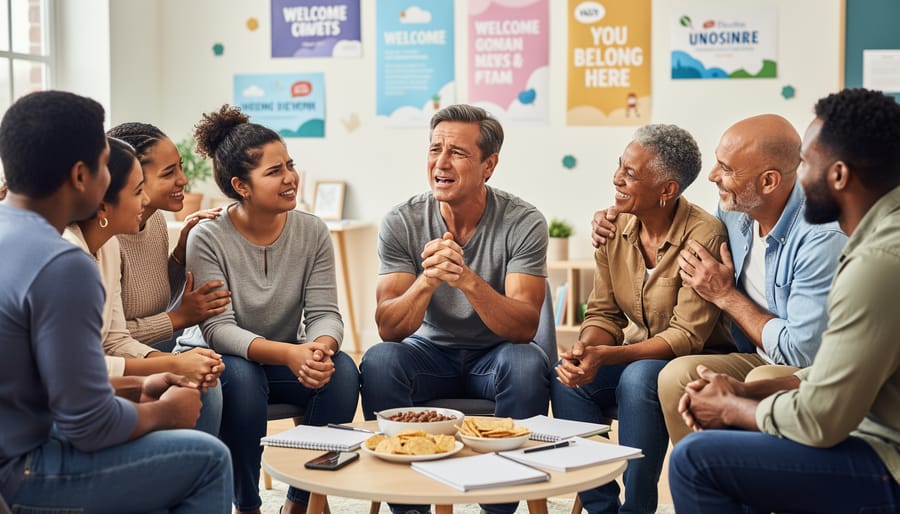
Understanding the abstract challenges refugees face becomes far more concrete when we see how they intersect in everyday situations. A Syrian engineer arrives in Seattle with professional credentials but can’t work in his field because his qualifications aren’t recognized. While navigating the recertification process, he takes a warehouse job that pays minimum wage, far below what he needs to support his family. Without affordable childcare or knowledge of local resources, his wife can’t attend English classes, compounding their isolation.
For LGBTQ refugees, these challenges often layer in particularly complex ways. A lesbian couple from Uganda secures housing after weeks of searching, only to face harassment from neighbors who discovered their relationship status. They’re hesitant to report the incidents, fearing it might jeopardize their immigration case. Meanwhile, one partner needs mental health support for trauma from persecution back home but can’t find a therapist who understands both refugee experiences and LGBTQ issues.
Service providers encounter these intersecting challenges daily. A case manager discovers that a trans refugee needs hormone therapy continuation but lacks insurance and faces discrimination at local clinics. The refugee missed two job interviews because they didn’t understand the bus system and couldn’t afford rideshares. Their phone service was disconnected due to confusion about billing, making it impossible for potential employers to reach them.
These scenarios reveal why understanding resettlement challenges matters beyond policy discussions. Advocates can identify gaps in services. Employers can recognize why refugees might struggle with seemingly simple tasks like completing online applications. Community members can offer practical help, explaining utility bills, practicing job interviews, or connecting newcomers with affirming spaces.
Each challenge rarely stands alone. Language barriers complicate healthcare access. Economic instability worsens housing insecurity. Social isolation deepens mental health struggles. Recognizing these patterns helps everyone respond more effectively to refugee needs.
Frequently Asked Questions About Refugee Resettlement Challenges
How long does the refugee resettlement process take?
The resettlement process typically takes 18 to 24 months from UNHCR referral to arrival in the resettlement country, though it can extend much longer depending on security clearances, medical screenings, and country-specific backlogs. For LGBTQ refugees, the timeline may be extended if additional documentation is needed to prove persecution based on sexual orientation or gender identity.
Are LGBTQ refugees given priority for resettlement?
UNHCR considers LGBTQ individuals as a vulnerable population when assessing resettlement needs, but they aren’t automatically prioritized over other refugees facing life-threatening situations. Priority depends on the severity of persecution, available protection in the country of asylum, and the resettlement country’s criteria for vulnerable populations.
What support do refugees receive when they arrive?
Most resettlement countries provide initial assistance through government programs and resettlement agencies, typically including temporary housing support, job placement services, language classes, and cultural orientation for the first 90 days to 12 months. The level and duration of support varies significantly by country and local resources available.
Can refugees choose which city or country they’re resettled to?
Refugees generally cannot choose their resettlement country, as UNHCR refers cases to countries willing to accept them based on availability and eligibility criteria. Once accepted, some countries allow limited input on city placement, but most assign locations based on available services, housing, and resettlement agency capacity rather than refugee preference.
What’s the single biggest challenge most refugees face during resettlement?
While challenges vary by individual circumstances, language barriers consistently rank as the most pervasive obstacle because they compound every other difficulty, from finding employment and accessing healthcare to navigating legal systems and building social connections. For many refugees, the inability to communicate effectively creates a cascade of setbacks across all areas of life.
These questions reflect what allies, potential supporters, and refugees themselves most frequently ask when trying to understand or navigate the resettlement landscape. Understanding these foundational aspects helps demystify a process that often feels opaque and overwhelming to those experiencing it or wanting to provide meaningful assistance.
For those looking to support refugees, the answers reveal practical intervention points. Language instruction and interpretation services address the most universal barrier. Advocacy for extended support periods beyond initial resettlement can counter the unrealistic expectation that refugees achieve self-sufficiency within months. Creating welcoming spaces specifically for LGBTQ refugees acknowledges their dual need for both ethnic community connection and affirming environments, two needs that don’t always align easily.
The complexity revealed in these answers also underscores why refugee resettlement requires sustained, multifaceted support rather than one-time charitable gestures. Each question points to systemic challenges that individuals face but cannot solve alone, making community networks, policy advocacy, and institutional change essential components of effective refugee support.
Types or components
The resettlement challenges refugees face can be organized into six interconnected components that together form the complete picture of their experience:
Structural barriers encompass the systems-level obstacles like immigration bureaucracy, housing markets, and healthcare infrastructure that refugees must navigate without prior familiarity.
Resource-based challenges involve tangible deficits: insufficient income, lack of professional networks, missing documentation, and inadequate access to services that meet basic needs.
Cultural and linguistic dimensions cover the adjustment required when your native language, customs, social norms, and communication patterns differ significantly from your new environment.
Psychosocial factors address the internal experience: trauma processing, identity reconstruction, grief for what was lost, and the emotional toll of starting over while managing ongoing stress.
Discrimination and marginalization represent the external hostility refugees encounter, from overt xenophobia to subtle biases that limit opportunities and acceptance.
Time-dependent transitions recognize that challenges evolve across resettlement phases, initial survival mode differs from longer-term integration struggles, with distinct needs at each stage.
Key Points
Refugee resettlement is a formal process through which refugees permanently relocate to a new country after fleeing persecution, conflict, or danger in their home country. This process is uniquely complex compared to other forms of immigration because it involves displaced individuals starting over with limited resources, often while carrying trauma and facing urgent safety concerns. For LGBTQ refugees, the challenges multiply as they navigate systems that may not recognize or affirm their identities while seeking safety from persecution based on sexual orientation or gender identity.
- Resettlement involves multiple stages from UNHCR referral through arrival and integration, with challenges emerging at each step
- Legal barriers include documentation requirements, asylum claim complexities, work authorization delays, and credential recognition issues
- Language obstacles affect access to employment, healthcare, education, and daily interactions with essential services
- Economic hardships stem from employment discrimination, credential barriers, and financial instability during the transition period
- Housing insecurity results from discrimination, unfamiliar rental systems, and limited affordable options in resettlement locations
- Healthcare access is complicated by system navigation challenges, insurance gaps, and limited culturally competent or LGBTQ-affirming care
- Social isolation occurs through loss of support networks, cultural disorientation, and difficulty building new relationships while facing discrimination
- LGBTQ refugees face intersectional challenges navigating both xenophobia and homophobia or transphobia in their new communities
Understanding these interconnected challenges helps allies, advocates, and service providers offer meaningful support that addresses the full scope of resettlement difficulties rather than isolated problems.
Understanding the challenges refugees face during resettlement is more than an academic exercise, it’s a call to empathy and action. The obstacles we’ve explored are significant, but they don’t define the refugee experience. Refugees demonstrate extraordinary resilience, rebuilding lives from scratch while navigating systems designed without them in mind. They contribute to their new communities, enrich local cultures, and often become powerful advocates themselves.
Yet acknowledging this strength doesn’t mean we should accept the barriers as inevitable. Every challenge outlined here represents an opportunity for meaningful support. Whether you’re an LGBTQ individual considering asylum, an ally wanting to help, or a service provider seeking to improve your work, your engagement matters.
Start small. Learn about local refugee organizations. Volunteer your time or skills. Advocate for policies that reduce administrative barriers and expand healthcare access. Create welcoming spaces where LGBTQ refugees can find both community and safety. Support credential recognition programs that help refugees use their professional skills. Even something as simple as showing up as a friendly face can break through isolation.
Resources exist, from UNHCR programs to grassroots LGBTQ refugee organizations, but they need funding, volunteers, and vocal advocates. The refugees arriving in your community today need more than awareness; they need housing assistance, language support, job connections, and affirming spaces where they belong.
Your understanding is the foundation. Your action is what transforms that knowledge into real change.