
LGBTQ refugees flee persecution that can mean the difference between survival and death. In more than 60 countries worldwide, same-sex relationships remain criminalized, and in at least seven, they carry the death penalty. For those who escape, the journey doesn’t end at a border crossing. It continues through complex asylum processes, temporary shelters, and the challenge of rebuilding a life in an unfamiliar place while carrying the weight of what was left behind.
The threats facing LGBTQ people aren’t abstract policy debates. They’re honor killings in Pakistan, state-sanctioned violence in Uganda, forced marriages in Iran, and conversion therapy camps in Chechnya. They’re families who become strangers overnight, communities that turn into mobs, and governments that write discrimination into law. When your identity itself is treated as a crime, leaving isn’t just a choice. It’s the only option.
But asylum seekers face a cruel paradox. The very thing that makes them vulnerable, their sexual orientation or gender identity, must be proven to immigration officials in countries where documentation of persecution rarely exists. How do you prove who you are when you’ve spent a lifetime hiding it? How do you recount trauma to strangers who hold your future in their hands?
This reality shapes every aspect of the refugee experience for LGBTQ individuals. From crossing borders where authorities may subject them to further abuse, to navigating detention centers that separate people by assigned sex rather than gender identity, to waiting months or years for asylum decisions while living in limbo. Yet within these stories of hardship lives extraordinary resilience. People who’ve lost everything still find ways to build community, advocate for others, and create safety where none existed before.
The Journey Before Safety: What Forces LGBTQ People to Flee
When Home Becomes the Danger Zone
For Amira, home became unbearable the day her brother discovered her texts to another woman. What followed wasn’t a conversation, it was a plan. She overheard relatives discussing an “intervention” that would involve sending her to a rural compound where family members could “correct” her behavior. In over 70 countries, being LGBTQ remains criminalized, but the real danger often comes from within one’s own walls.
Daniel’s experience in Eastern Europe followed a different pattern but ended with the same desperate need to flee. After being photographed at a small pride gathering, his image circulated on social media with his home address. Strangers began appearing outside his apartment. His employer fired him without explanation. When he reported threats to police, officers laughed and suggested he “stop making a spectacle” of himself.
These aren’t isolated incidents. Trans individuals face particular vulnerability, Yasmin was forced into conversion therapy by her parents, then faced arrest when she sought help from authorities who viewed her identity itself as criminal. The violence LGBTQ people experience at home isn’t always physical. It’s the uncle who stops speaking to you. The mother who cries as if you’ve died. The community that once protected you now hunting you.
When your own family becomes the threat, there’s nowhere to hide. That’s when home stops being home, and survival means running toward uncertainty.
The Impossible Choice to Leave
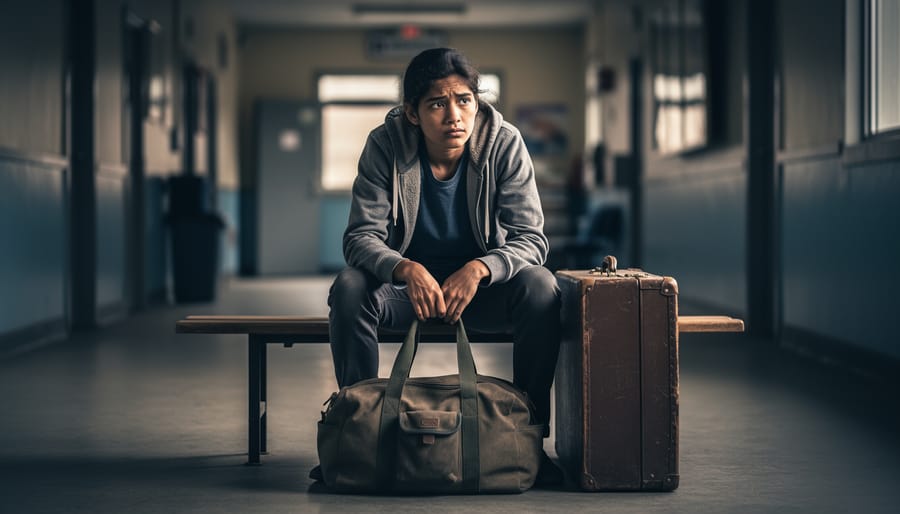
The moment of decision to flee carries a weight that goes far beyond packing a bag. For LGBTQ individuals, leaving often means abandoning everyone and everything that has shaped their identity, parents who may never understand, siblings they’ve protected, friends who became chosen family, and the language, food, and rhythms of home that live in their bones.
Many describe it as choosing between two impossible futures: staying and living in fear, or leaving and losing yourself in a different way. You’re not just leaving a country. You’re walking away from your mother’s cooking, from the streets you know by heart, from the community events that marked your calendar. Even when home has become dangerous, it’s still home.
The practical barriers compound the emotional toll. Most don’t have savings for travel. Obtaining necessary documents without raising suspicion requires careful planning. Some must lie to family about their destination, inventing business trips or study programs, knowing they may never see these people again.
And there’s the terrifying uncertainty of what comes next. Where will you go? How will you survive the journey? What if the country you reach sends you back? The calculation isn’t rational, it’s visceral, driven by the instinct that any chance at safety is worth the loss.
Navigating the Asylum Process: Hope Meets Bureaucracy
The Burden of Proof: Documenting the Undocumentable
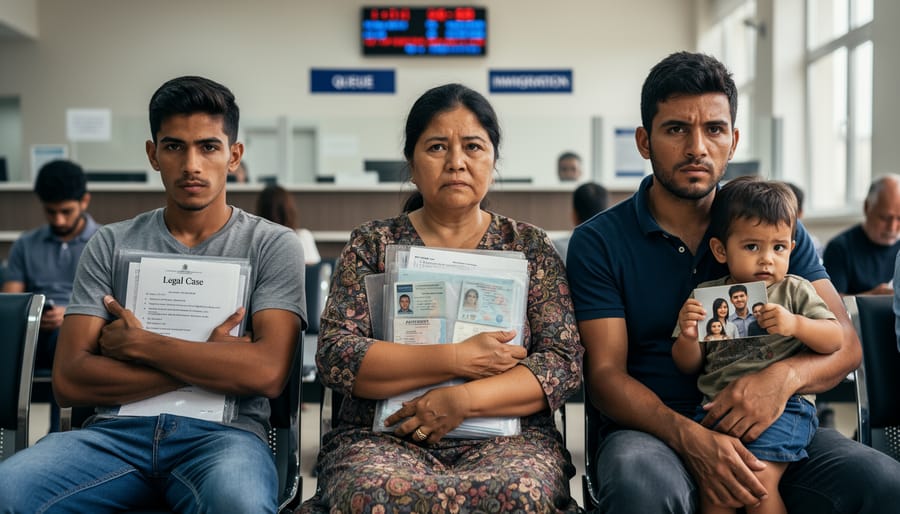
Imagine sitting across from a government official, being asked to prove you’re gay. Not through a certificate or a simple declaration, but through intimate details of your life that you’ve hidden for survival. This is the paradox asylum seekers face: the very secrecy that kept them alive now works against them.
Immigration authorities regularly demand evidence that most people never collect about themselves. They want photographs from Pride events you couldn’t attend without risking death. They ask for messages with romantic partners when keeping such evidence could have gotten you killed. Some countries have even requested “proof” through explicit materials or psychological testing, invasive practices now widely condemned as ineffective and dehumanizing.
The documentation of identity challenges reveal a fundamental misunderstanding. Sexual orientation and gender identity aren’t performances that leave paper trails. They’re internal realities often deliberately hidden in hostile environments.
Adjudicators scrutinize everything from how you dress to whether your story matches their assumptions about what being LGBTQ “looks like.” Studies on credibility in LGBTQ claims show that officers frequently rely on stereotypes rather than recognizing the diversity of LGBTQ experiences.
Many applicants face rejection because they don’t fit narrow Western narratives of coming out or because they can’t articulate their identity in ways that satisfy officials. You’re essentially asked to prove the unprovable while your life hangs in the balance.
Legal Support That Understands Your Story
Finding a lawyer who truly understands LGBTQ asylum cases can mean the difference between approval and deportation back to danger. Not all immigration attorneys have experience with the nuances of sexual orientation and gender identity claims, and that gap in knowledge can sabotage even the strongest case.
Specialized LGBTQ asylum attorneys know how to frame your narrative in legal terms that satisfy asylum requirements without forcing you to perform or prove your identity in dehumanizing ways. They understand that you likely don’t have a Pride parade photo album or public coming-out announcement from a country where being out could have gotten you killed. These lawyers know how to present circumstantial evidence, explain the cultural context of your home country, and prepare you for the types of intrusive questions adjudicators may ask during interviews.
Organizations like Immigration Equality in the United States provide free legal services specifically for LGBTQ and HIV-positive asylum seekers. Rainbow Railroad connects people fleeing persecution with emergency relocation assistance and legal referrals. In Canada, the Rainbow Refugee Society offers settlement support alongside legal guidance. The UK Lesbian and Gay Immigration Group provides legal advice and representation throughout the asylum process.
When you’re evaluating potential legal representation, ask directly about their experience with LGBTQ asylum cases. How many have they handled? What’s their success rate? Will they connect you with mental health support to address trauma that may affect your testimony? A good LGBTQ asylum lawyer doesn’t just file paperwork, they become your advocate, translator, and sometimes the first person who believes your story without question.
Many of these specialized services operate on sliding scale fees or pro bono, recognizing that fleeing persecution rarely comes with savings.
Life in Limbo: The Refugee Experience Between Countries
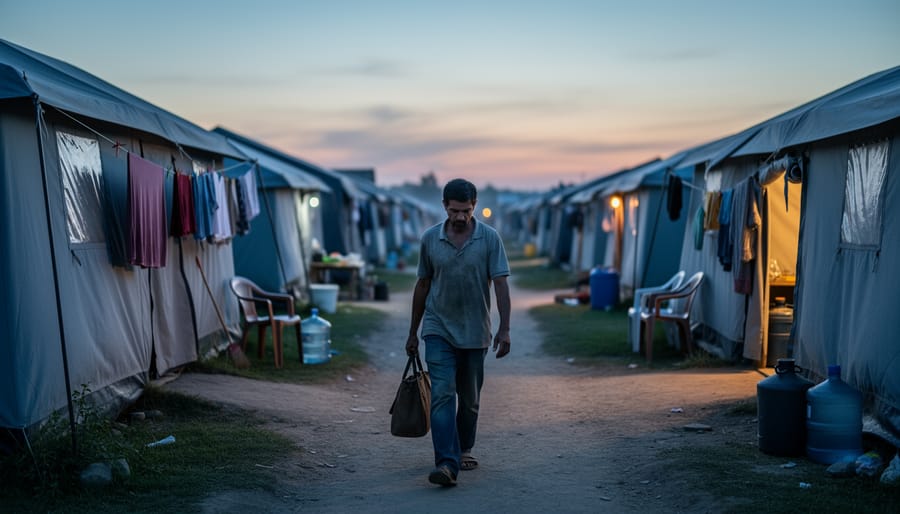
The period between fleeing and finding sanctuary is where many LGBTQ refugees face their darkest hours. While waiting months or even years for asylum decisions, they exist in a legal gray zone that offers neither the security of home nor the protections of resettlement. During this time, they’re vulnerable to exploitation, violence, and the very persecution they fled.
Refugee camps and detention centers designed for mass processing rarely account for LGBTQ safety. Shared sleeping quarters, communal bathrooms, and lack of privacy create dangerous situations. Trans women housed with men face sexual assault. Gay men encounter homophobic violence from other refugees who bring the same prejudices that forced them all to flee. Camp authorities often dismiss complaints or, worse, participate in the abuse.
Many LGBTQ refugees avoid official camps entirely, choosing precarious urban hiding instead. They live in overcrowded apartments, sleep in parks, or exchange labor for shelter. Without work permits, they take exploitative jobs that pay pennies and demand silence about mistreatment. Sex work becomes survival for some, compounding trauma and health risks.
Healthcare remains largely inaccessible. HIV-positive refugees struggle to maintain medication regimens. Trans individuals can’t access hormone therapy, forcing medical detransition that devastates mental health. Depression, anxiety, and PTSD symptoms intensify without treatment, yet mental health services are virtually nonexistent in transit situations.
The psychological toll of limbo compounds daily. Uncertainty about the future breeds constant anxiety. Many refugees describe this waiting period as worse than the initial flight because hope battles against powerlessness. They’ve sacrificed everything for safety that remains tantalizingly out of reach, unable to move forward or return home.
For those eventually resettled in countries like the United States, ORR support services provide crucial assistance, but the damage from limbo persists. The isolation, trauma, and lost years leave scars that don’t heal upon arrival. Understanding this in-between experience reveals why LGBTQ refugees need comprehensive support that begins the moment they flee, not just after they’re granted papers.
Stories of Resilience: LGBTQ+ Refugee Narratives That Inspire
From Persecution to Pride: Transformation Through Resettlement
Jamal fled Uganda in 2019 after his partner was murdered and local police threatened him with arrest under the country’s anti-homosexuality laws. He spent 14 months in a Kenyan refugee camp, sleeping with one eye open, before Canada accepted his asylum claim. Today, he coordinates peer support groups for newly arrived LGBTQ refugees in Toronto, translating his trauma into service. “I survived so I could help others survive,” he says, his apartment walls covered with photos of the community he’s built.
Maria’s transformation took a different path. After escaping Russia’s anti-LGBTQ propaganda laws in 2021, she arrived in Berlin speaking almost no German and sleeping on the couches of strangers from online forums. Understanding how resettlement works took months of navigating bureaucracy, but a local LGBTQ refugee organization connected her with language classes and job training. She now manages a café that employs three other refugees and hosts weekly support meetings.
These stories share common threads: initial terror giving way to cautious hope, strangers becoming chosen family, and the discovery that safety allows authentic self-expression for the first time. Ahmed, who fled Iran’s death penalty for same-sex relations, told me he cried the first time he held his boyfriend’s hand in public in Amsterdam. That small act represented everything his resettlement meant: not just survival, but the freedom to love openly.
Building Chosen Families in New Lands
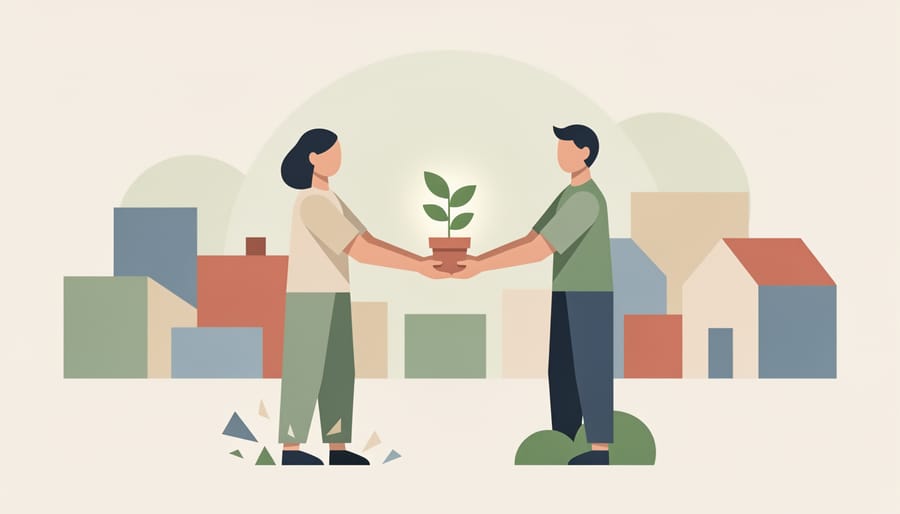
For many LGBTQ refugees, the family they left behind rejected them. The family they build in their new home becomes everything.
Ahmed arrived in Toronto having lost contact with everyone he’d known in Egypt. Within months, he’d found his people at a local LGBTQ community center’s weekly potluck. “We share recipes from our countries, celebrate each other’s birthdays, help with job applications,” he explains. “These strangers became my sisters and brothers.”
This pattern repeats across resettlement communities. Refugees connect through LGBTQ organizations, faith groups like Metropolitan Community Church, asylum seeker support networks, and even dating apps repurposed for friendship. A trans woman from Uganda might mentor a newly arrived trans teen from Honduras. A gay Syrian couple hosts dinners for other Arabic-speaking refugees navigating similar losses.
These chosen families provide what legal documents cannot: someone to call during a panic attack at 2 a.m., a familiar face at your first Pride parade, advice on explaining your asylum story to a potential employer. They celebrate milestones that biological families missed, coming out anniversaries, name change approvals, first apartments.
Support groups specifically for LGBTQ refugees have emerged in major resettlement cities, offering both practical help and emotional sanctuary. Participants often describe these spaces as the first time they’ve felt truly seen, as both LGBTQ and as refugees, identities that intersect in ways only others with shared experience fully understand.
What LGBTQ Refugees Need After Arrival
Crossing a border doesn’t flip a switch from danger to stability. Many LGBTQ refugees arrive carrying invisible weight, trauma from persecution, family rejection, or violence they survived. Mental health support isn’t a luxury here; it’s foundational. Yet culturally competent therapists who understand both refugee experiences and LGBTQ identities remain scarce in most cities. Without processing that trauma, even simple tasks like job interviews or making new friends can feel overwhelming.
Employment presents its own maze. Your law degree from Tehran or teaching credentials from Uganda often mean nothing in Toronto or Manchester. Starting over financially while navigating resettlement challenges means many refugees take survival jobs far below their qualifications. Language barriers compound this. Learning professional-level English or French while working shifts and attending mandatory settlement appointments stretches people thin.
Housing insecurity follows close behind. Landlords who discriminate, unaffordable rents in cities with LGBTQ communities, or being placed in conservative neighborhoods where you’re not safe being out, these aren’t hypothetical scenarios. They’re daily realities. Some refugees choose between living authentically and living safely, the same impossible choice they thought they’d left behind.
Healthcare access reveals other gaps. Transition-related care for trans refugees, HIV treatment continuity, or simply finding doctors who won’t retraumatize you with invasive questions about your identity, all require navigating systems that weren’t built with you in mind. The Office of Refugee Resettlement provides some support, but programs vary wildly by location.
Then there’s the heart of it: belonging. Finding LGBTQ community in your new country matters as much as finding housing. You need spaces where you’re not explaining yourself, where people get both parts of your story. But cultural differences within LGBTQ communities can create new isolation. A gay refugee from Somalia and a queer person born in Seattle might struggle to connect across vastly different lived experiences.
What refugees need most is wraparound support that addresses all these pieces together, not fragmented services that treat housing, mental health, and community integration as separate problems. Because they’re not.
How Allies and Organizations Can Make a Real Difference
Supporting LGBTQ refugees requires more than awareness. It demands concrete action from individuals who can offer time, resources, and advocacy. Whether you’re part of an established organization or simply want to help, these tangible steps create meaningful change in refugees’ lives.
- Connect with local refugee resettlement agencies to learn about specific needs in your area. Many organizations offer volunteer orientations where you can discover how your skills match current gaps.
- Become a mentor or cultural navigator who helps with everyday challenges like navigating public transportation, understanding local customs, or practicing conversational English in a safe environment.
- Donate to organizations providing specialized help for LGBTQ seekers where funding often supports trauma counseling, legal assistance, and emergency housing.
- Advocate for inclusive policies at the local and national level by contacting representatives, attending town halls, and supporting legislation that protects refugee rights and streamlines asylum processes.
- Create welcoming spaces in your workplace, faith community, or social groups by organizing educational events, establishing resource funds, or simply making it known that LGBTQ refugees are welcomed and valued.
Organizations need more than good intentions. They need staff training on LGBTQ cultural competency, partnerships with legal aid providers who understand asylum law, and physical spaces where refugees feel safe being themselves. Housing providers can prioritize placements that protect against discrimination. Healthcare facilities can ensure interpreters understand LGBTQ terminology and medical needs.
Faith communities play a surprisingly powerful role. Many refugees come from countries where religion justified their persecution, yet affirming congregations offer both spiritual healing and practical support networks. These communities can sponsor refugee families, provide housing, and create the chosen family structures that replace what was lost.
Your contribution doesn’t need to be grand. Sometimes the most powerful support is showing up consistently, treating someone’s identity as normal rather than remarkable, and offering friendship without conditions.
The stories of LGBTQ refugees reveal a truth we cannot ignore: the journey to safety doesn’t end when someone crosses a border or receives official papers. Every narrative we’ve explored shows that true refuge means access to healthcare that understands your needs, employment that respects your identity, and communities where you can finally exhale without fear.
These aren’t distant statistics. They’re people who’ve shown extraordinary courage in the face of persecution, who’ve rebuilt their lives from scratch in unfamiliar places, who’ve turned their trauma into advocacy for others still waiting. Their resilience doesn’t erase the fact that they shouldn’t have had to flee in the first place, but it does illuminate what becomes possible when support systems actually work.
The global crisis facing LGBTQ refugees continues to grow. Over 70 countries still criminalize same-sex relationships, and countless others allow discrimination to flourish unchecked. But the solution isn’t just better asylum laws, though we desperately need those. It’s creating spaces where refugees can live authentically, where their identities are celebrated rather than scrutinized, where belonging isn’t conditional.
Whether you’re someone seeking safety or an ally wanting to help, remember this: every act of support matters. Every inclusive policy, every welcoming gesture, every shared resource moves us closer to a world where no one has to choose between their home and their humanity. That’s the future these narratives are calling us to build together.