
The best refugee stories for students are first-person, age-appropriate, and honest about hardship without leaving young readers in despair. This list gathers seven that meet that bar: a young refugee’s memoir of flight and starting over, a graphic memoir that makes a journey visual, an LGBTQ asylum seeker’s account of safety and identity, a documentary following real families through displacement, a novel based on true experiences, free online collections of firsthand testimony, and a picture book about welcoming new neighbors. Together they span picture-book age to high school, so a teacher, librarian, or parent can find a fit quickly.
Why stories, and not just facts? Statistics tell students that people are displaced. A single voice tells them what it felt like to leave a kitchen table behind, to wait in a line for a decision, to learn a new language while grieving the old one. That’s where empathy takes root, and where good classroom conversations begin.
We’ve included LGBTQ refugee voices on purpose. Many queer and trans people flee because of who they are, and their stories show courage, community, and the slow work of building a life where you can be yourself. It’s a kind of Pride confidence that starts long before the parade.
Below, you’ll find our selection criteria, each pick with its benefit, tips for discussion, and answers to common questions.
How We Chose These Refugee Stories for Student Readers
Every story in this list had to clear the same few bars. We wanted accounts that put a real person at the center, whether told in their own words or reported closely and carefully. Beyond that, we looked for:
- First-person or closely reported voices, so students hear from people who lived it.
- Age-appropriateness, with clear content notes so you know what’s coming before you hit play or turn the page.
- Credible, verifiable sources, from established authors, filmmakers, and reputable organizations.
- A range of origins and identities, including LGBTQ refugees, because there is no single refugee story.
- Hopeful, agency-centered framing that shows resilience and choice, not pity.
- Easy access, meaning readable length and availability in libraries or free online.
We also paid attention to tone. Hardship is part of these journeys, and we didn’t want to skip it. But a story that leaves students seeing only victims misses the courage, humor, and ordinary dreams that run through so many of these accounts.
A quick note on what this list is. It’s an editorial selection, not a ranking, and we didn’t run hands-on tests or score each pick against the others. Think of it as a thoughtful starting point rather than a verdict. You know your students, your classroom, and your community far better than we do, so trust your own judgment about what fits. Some picks may suit your group right away, and others may be better saved for later or paired with a conversation first.
1. A Memoir of Flight and Starting Over, Told by a Young Refugee
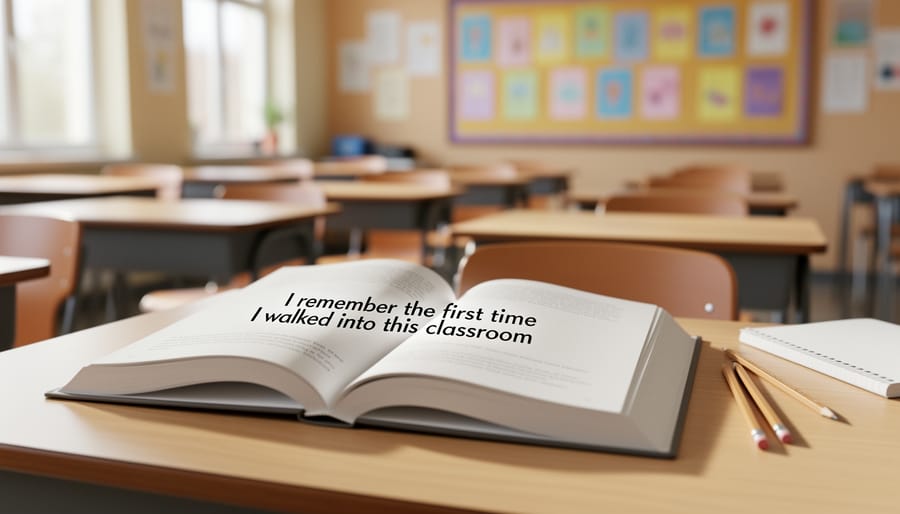
One well-established choice here is Inside Out & Back Again by Thanhha Lai, a novel in verse inspired by the author’s own childhood. It follows ten-year-old Hà as her family leaves Saigon in 1975 and resettles in Alabama. It is not a strict memoir, but it draws on Lai’s real experience, so it reads with the honesty of one.
The story moves through a year of firsts: a crowded boat, a new school, unfamiliar food, and the baffling rules of English. Hà is funny and stubborn, and she misses her father, who is still missing in the war. Readers see displacement through a child’s eyes, where a lost papaya tree matters as much as a lost home.
It suits roughly grades 4 to 8. The short, free-verse poems make it approachable for reluctant readers and English learners, though some content touches on war, loss, and bullying, so a quick preview helps.
Key themes include leaving home, belonging, language, and family. Hà’s struggle to make sense of English is especially relatable, whether or not a student has ever moved.
For a practical classroom activity, ask students to choose one poem and rewrite it from a different character’s view, such as Hà’s mother or a classmate. It builds empathy while sharpening close reading, and it invites students to notice how much any story depends on who is telling it.
2. A Graphic Memoir That Makes a Refugee Journey Visual and Accessible
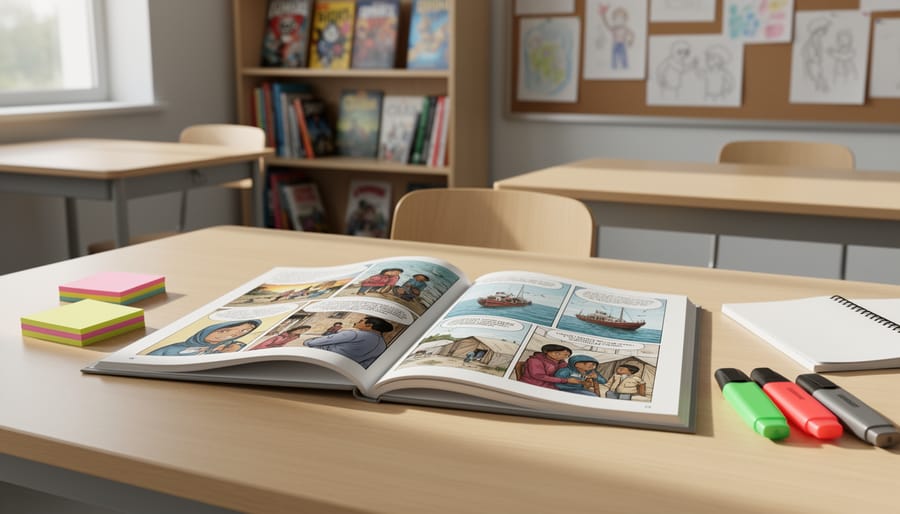
One of the best-known examples is The Arrival by Shaun Tan, a wordless graphic novel, but for a true account, consider The Best We Could Do by Thi Bui. It is a graphic memoir in which Bui traces her family’s escape from Vietnam after the war, then her own path to becoming a parent in America. The drawings carry memory, fear, and tenderness in ways plain paragraphs sometimes can’t.
The format is its biggest strength. Images slow readers down and let them linger on a face or a crowded boat. They also lower the barrier for students who find dense text intimidating, including English learners and reluctant readers. A single page can say what takes a chapter to explain.
This book suits older students best, roughly grades 9 through 12, and works well in college-level courses too. It moves between past and present, which can take a second read to follow, so a short timeline on the board helps.
Prepare students for heavy content: war, dangerous sea travel, loss, and the lasting weight of trauma on a family. Preview those pages yourself first and let students know they can step away if something feels too close to home.
Discussion prompts to try:
– How do the illustrations show feelings the words leave unsaid?
– What does the author’s own experience as a new parent change about how she understands her parents’ choices?
– What does “home” mean after leaving one behind?
3. An LGBTQ Asylum Seeker’s Story of Safety, Identity, and Resettlement
Asylum, put simply, is protection offered by one country to a person who cannot safely stay in their own, often because they face persecution for who they are. For many LGBTQ people, that danger is tied to their identity, their relationships, or simply being seen as different.
A strong choice here is *Leaving Dignity*-style first-person testimony from LGBTQ asylum seekers, and one widely available option is the documentary *Seeking Asylum*-type storytelling found through organizations like the Rainbow Railroad and the UN Refugee Agency, which publish personal accounts in people’s own words. Please confirm the specific title, rating, and availability before assigning it, since offerings change.
What makes these stories valuable for students is how they hold two truths at once. They don’t minimize the fear and loss of leaving home, yet they also show people building safety, finding community, and living openly, often for the first time. That balance helps older students see asylum seekers as full people with courage, humor, and futures, not just as figures in a news report.
In the classroom, keep in mind that LGBTQ students may be listening more closely than anyone realizes. Frame the story around the storyteller’s resilience, avoid asking students to guess about each other’s identities, and make clear that your room is a respectful place for everyone. This pairs best with middle and high school groups, and with a brief, open conversation afterward about safety, belonging, and what welcome can look like.
4. A Documentary Film That Follows Real Families Through Displacement
Documentary film can do something a textbook rarely manages: it lets students watch real families make impossible choices in real time. A strong classroom choice is Human Flow, Ai Weiwei’s 2017 documentary, which follows displaced people across dozens of countries. Because the film moves between camps, borders, and temporary shelters, students see how varied displacement is, and how many ordinary lives it interrupts.
Viewers meet parents carrying children across rough terrain, teenagers waiting in crowded settlements, and families trying to rebuild routines in unfamiliar places. The pacing is slow and observational, which gives students room to notice details rather than rush toward a conclusion.
This film suits older students best, roughly high school age, and teachers should preview it first, since it contains difficult scenes and some distressing imagery. The runtime is well over two hours, so most classrooms will do better showing selected excerpts across two or three sessions than screening it in one sitting. Check current availability and any rating before you plan, as streaming access changes.
To get the most from it, pair viewing with a few open reflection questions:
– What did you notice about daily life in the places shown?
– Whose voice felt most present, and whose was missing?
– How does seeing a face change the way you think about the word “refugee”?
Invite students to respond in writing first, then discuss, so quieter voices are heard too.
5. A Novel Based on True Refugee Experiences for Middle and High Schoolers

One strong choice here is Inside Out & Back Again by Thanhha Lai, a middle-grade novel in verse. Lai drew on her own childhood as a girl who left Vietnam in 1975 and resettled in Alabama, so the story rests on lived experience even though it is fiction. For older readers, Refugee by Alan Gratz follows three children in different eras and countries, and it suits many high school classrooms.
Fiction earns its place on this list because it lets students stay inside one character’s head for a whole book. They feel the confusion of a new language, the sting of being the outsider, and the worry for relatives left behind. That kind of sustained closeness often opens a door that a news report can’t.
The themes give teachers plenty to work with: identity and what it means to belong, the courage ordinary kids show, and the ache of family separation. A good discussion prompt is to ask what a character holds onto when almost everything else is gone.
It also helps to be clear with students about what kind of book this is. A novel based on true experiences is shaped by an author’s choices, so it isn’t the same as firsthand testimony. Pair it with a real account to show the difference, and remind students that safety on arrival is only the start. Many newcomers need more than asylum papers to build a life, and the best novels hint at that long road.
6. Free Online Collections of First-Person Refugee Testimony
Free online collections of first-person testimony are some of the most flexible tools a classroom can use. Many established refugee and human rights organizations, along with university archives and oral history projects, host stories that refugees have chosen to share in their own words. You’ll find written accounts, short audio recordings, and video interviews, which means you can match the format to your students’ reading levels and your available class time. A single five-minute testimony can anchor a lesson, while a longer set of stories can support a research project.
Because these collections are free, they’re also easy to adapt. Pick one story for a whole-class discussion, or let small groups explore different voices and compare what they notice about home, safety, and starting over.
Treat each storyteller with care. These are real people who gave their consent for a particular purpose, so encourage students to listen respectfully and avoid guessing at details that weren’t shared. Credit the speaker by name when the source does, and never ask students to retell a story as though it were their own.
Before you use any collection, check that it’s credible and current. Look for a clear host organization, an explanation of how stories were gathered with consent, and recent updates or working links. Preview everything first, since some testimonies describe violence or loss, and a quick read-through helps you decide what suits your students.
7. A Picture Book for Younger Students About Welcoming New Neighbors
For younger students, one of the gentlest ways in is a picture book like Mama’s Nightingale by Edwidge Danticat. It follows a little girl whose mother is held in an immigration detention center, and it shows how her stories, shared with a whole community, become a way to be heard. It’s best suited to ages five to eight, and it handles a hard topic with real care.
The book never lingers on frightening detail. Instead, it keeps the child’s feelings at the center, and that’s what makes it work in a classroom. Young readers can see worry, courage, and love without being overwhelmed. It also shows kindness in action: neighbors, teachers, and strangers who choose to listen and help.
That gives you easy ways to talk about belonging. Ask students what makes a new place feel like home, or what small things they could do to welcome a new classmate. Questions like these turn empathy into something children can practice.
For adults reading alongside them, a little background goes a long way. Our piece on resettlement challenges explains what families often face after arriving, and how resettlement helps shows the support that’s available. If you’re thinking about the LGBTQ families in your community, our LGBTQ rights guide offers a clear starting point.
Before you read it aloud, check the book’s availability at your library, since editions and stock vary.
Bringing These Stories Into the Classroom Thoughtfully
Start with context before you press play or hand out a book. Tell students who the storyteller is, where the story takes place, and why you chose it. A few sentences of background keep a personal account from becoming a stand-in for an entire people.
Don’t assume you know who is in your room. A student, a classmate’s parent, or a colleague may have a family history of displacement, and some may not want to announce it. Invite reflection rather than disclosure, and let anyone pass on sharing without explanation.
Keep the storyteller at the center. Let their words lead, and resist the urge to summarize their pain for them. When you discuss a memoir, a documentary, or an online testimony, ask what the person chose to share and what they did to move forward, rather than asking students to imagine themselves in the worst moments. That shifts the focus from pity to respect.
Finally, turn empathy into something students can do. That might mean writing welcome notes for newcomers, learning a few phrases in another language, or supporting an organization that serves refugees. If your students want to keep reading, Outwords Magazine’s own resettlement stories are a good place to continue.
Common Questions About Teaching Refugee Stories
Teachers and parents often ask the same handful of things before they pick up one of these stories. Here are plain answers to the most common ones.
What age is right for refugee stories?
It depends on the story and the student. Younger children do well with gentle picture books about welcome and belonging, while middle and high schoolers can handle memoirs, graphic memoirs, documentaries, and novels with heavier themes. Preview anything first, since you know your students best.
How do I handle difficult content?
Tell students what to expect before you begin, and give them a way to step out or pause if something feels too close to home. Afterward, leave room for questions and quiet reflection rather than rushing to a lesson.
How can I include LGBTQ refugee voices respectfully?
Let LGBTQ storytellers speak in their own words, and use the language they use for themselves. Share these accounts with care for LGBTQ students in the room, and never assume anyone’s identity or background.
Where can students learn more or help?
Free first-person testimony collections are a good next step for learning more. Students can also write welcome notes, collect supplies, or support a local refugee-serving organization, with an adult’s guidance.
A good rule of thumb is to treat these stories as the start of a conversation, not a lesson with a single right answer. Let the storytellers lead, listen closely, and trust students to bring their own questions.
When students meet one person’s story, a refugee stops being a headline and becomes someone with a name, a family, a sense of humor, and a hope for what comes next. Every pick on this list, from the picture book to the memoir to the first-person testimony, offers a different doorway into that understanding, and each leads toward empathy and hope.
Share these stories with your classroom, your library, or the young people in your life, and let the conversations they spark carry forward. For more voices, resettlement stories, and ways to stand alongside newcomers, keep exploring Outwords Magazine.