
Finding the perfect rhyme can make or break your bars. Whether you’re working on your first 16 or polishing a track for release, the right rhyme tools help you write faster, dig deeper into your vocabulary, and keep your flow sharp without stalling out mid-session.
Rappers today have access to far more than just a pocket rhyming dictionary. AI-powered generators like RapCoach AI and Lyric Studio deliver instant rhymes from databases of over 130,000 words, while tools like Freebeat and Solmi write full verses and battle rhymes in seconds when you need a creative spark. These platforms let you filter by rhyme scheme, theme, and even subgenre, so you can match your concept to the exact vibe you’re chasing.
For LGBTQ artists especially, hip hop has become a vital medium for storytelling and resistance. Finding your voice in rap means claiming space in a genre that hasn’t always made room for queer narratives. The tools in this guide give you the technical foundation to focus on what matters most: your message, your truth, and the stories only you can tell.
This listicle breaks down the best rhyme dictionaries, AI generators, and practical techniques available in 2026, from free apps you can download today to frameworks that help you build multisyllabic schemes and internal rhymes. You’ll walk away with a toolkit that supports every stage of your writing process, whether you’re freestyling on the spot or crafting lyrics that demand precision.
Why Rhyme Resources Matter for Hip Hop Artists
Access to varied rhyme resources isn’t just a convenience for hip hop artists, it’s a strategic advantage. Whether you’re drilling multisyllabic patterns in a traditional rhyme dictionary or generating fresh word combinations through an AI tool, these resources expand your vocabulary, sharpen your ear for phonetic matches, and push you past the predictable rhymes that every listener has heard before. That breadth matters when you’re building verses that need to land with authenticity and precision.
Rhyme tools also break creative blocks. Staring at a blank page waiting for the perfect line can stall momentum, but a generator or dictionary can surface unexpected connections that spark a new direction. That speed and variety keep the writing process fluid, especially when you’re iterating quickly or testing different flows.
For LGBTQ rappers, these resources serve a deeper purpose. Hip hop has long marginalized queer narratives, but access to robust rhyme tools helps artists craft verses that center their own experiences with the same technical polish and lyrical density that commands respect in the genre. A well-stocked vocabulary and command of internal rhyme, slant rhyme, and multisyllabic schemes let you tell stories mainstream hip hop often sidelines, identity, resilience, love outside heteronormative frames, with the craft that makes listeners stop and pay attention. The LGBTQ voice in hip hop grows stronger when artists have the tools to match their truth with undeniable skill.
How We Chose These Rhyme Tools and Techniques
We built this list around what working rappers need right now: practical tools you can use today without breaking the bank. Accessibility came first. Every tool here offers a free tier or freemium model, so you can start writing without upfront costs. Feature depth mattered too. We looked for strong rhyme databases (like Lyric Studio’s 130K-word dictionary), AI capabilities that handle multisyllabic patterns, and customization options that let you dial in your specific subgenre or theme.
Ease of use separated contenders from pretenders. Whether you’re sketching your first sixteen bars or you’ve been in the booth for years, these tools work fast and stay out of your way. Finally, we prioritized relevance to 2026 technology trends. AI-assisted writing has matured this year, and rappers deserve tools that reflect that progress, generators that understand flow, not just random word matching. We also included proven techniques and community practices, because technology assists craft but doesn’t replace it.
1. RapCoach AI, Freestyle Prompts and Rhyme Generation for Practice
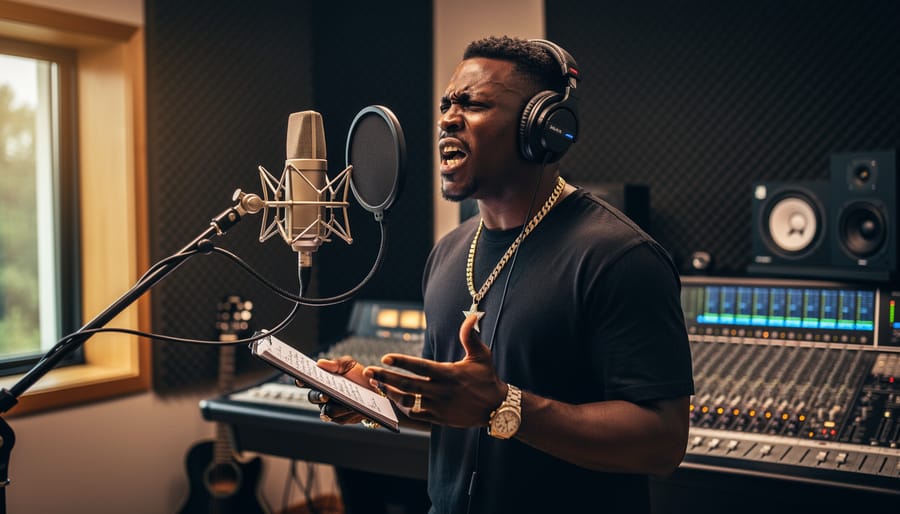
RapCoach AI positions itself as a daily practice companion for rappers at any skill level. The app bundles several tools into one package: a rap lyrics generator that suggests lines and verse structures, freestyle rap prompts to spark improvisation sessions, dedicated rhyme generators for finding matching words, and broader hip hop songwriting tools that help organize choruses, bridges, and full track layouts. It’s designed to be opened every day, not just when you’re stuck.
What sets RapCoach apart is its emphasis on skill-building rather than finished product. The freestyle prompts push you to write under constraints, specific topics, time limits, or rhyme schemes, which mimics the pressure of a live cypher and builds mental agility. The rhyme generators work well for exploring phonetic matches you might not land on naturally, especially useful when you’re telling a story that doesn’t fit mainstream vocabulary.
For LGBTQ rappers refining their voice, the practice-first approach helps you experiment with wordplay around identity, community, and lived experience without the pressure of a final take. You can test flows, swap rhymes, and iterate until the verse feels true. Think of RapCoach as a training gym: the tools are there to sharpen your technique, but the stories and authenticity you bring are entirely yours.
2. Lyric Studio, AI-Powered Rhyme Dictionary with 130K+ Words
Lyric Studio stands out for its sheer database size, giving you access to over 130,000 words when you’re hunting for the right rhyme. The app is free to download with optional in-app purchases, making it a low-risk starting point if you’re new to rhyme tools or working on a budget.
What sets Lyric Studio apart is its AI-assisted search that surfaces both obvious and overlooked matches. Instead of just pulling up “cat, hat, sat,” the tool digs into less common words and multi-syllable options you might not think of on your own. That breadth helps when you’re trying to avoid clichés or find a word that fits your specific subject matter, whether you’re writing about coming out, navigating queer love, or any other topic mainstream rap underserves.
The interface is built for speed. You type a word, and the app returns a ranked list of rhymes by syllable count and phonetic closeness. You can filter by perfect rhymes, near rhymes, or word type, which is useful when you need a verb instead of a noun to keep your flow active. For LGBTQ rappers building a distinct voice, having this many options at your fingertips means you can be precise without settling for generic filler just to close a bar.
3. Freebeat AI Rap Lyrics Generator, Full Songs and Battle Rhymes
Freebeat’s AI rap lyrics generator stands out for its versatility in handling different creative needs. Whether you’re stuck mid-verse, prepping for a battle, or sketching out a full track, this tool can generate complete verses, targeted battle rhymes, or even entire song structures in moments. That makes it particularly useful when you hit a creative wall or need to iterate quickly through multiple concepts before settling on a direction.
The generator’s strength lies in rapid idea generation. You can input a theme or mood, and Freebeat will produce lyrical options you can refine, remix, or use as a jumping-off point for your own bars. For rappers exploring LGBTQ themes or personal narratives that don’t fit mainstream templates, this kind of tool helps you experiment with language and flow without the pressure of a blank page. The battle rhyme feature is especially handy for sharpening punchlines and wordplay, skills that translate directly to live performance and cypher settings.
That said, AI-generated lyrics work best as a starting point rather than a finished product. Use Freebeat to break through writer’s block or explore new rhyme patterns, then layer in your own voice, experiences, and authenticity to make the verses truly yours.
4. Solmi Free AI Rap Lyrics Generator, Fast 16-Bar Drops and Hooks
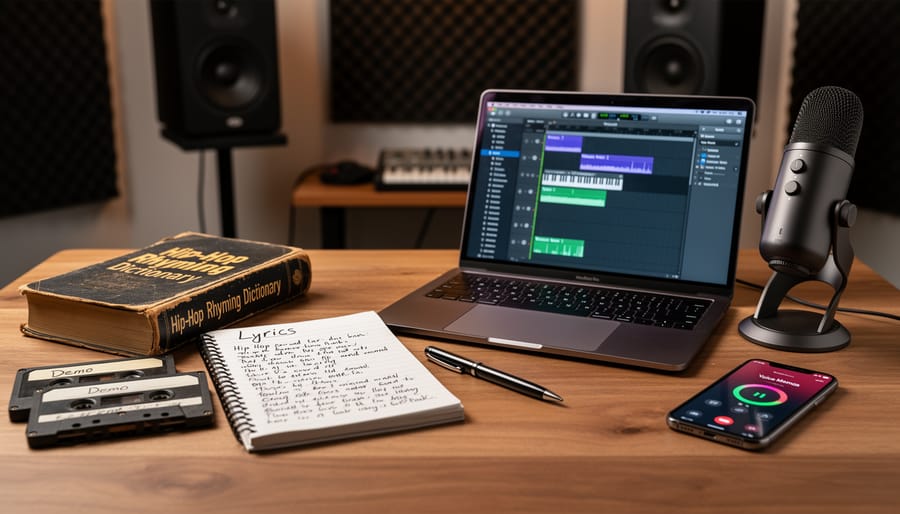
Solmi’s free AI rap lyrics generator is built for speed. When you’re racing against a studio booking or want to test five different angles before settling on one, Solmi delivers full verses, hooks, and complete 16-bar drops in seconds. The tool focuses on structural consistency, so the output typically adheres to standard rap formatting, four-bar hooks, sixteen-line verses, predictable rhyme placements, which makes it easy to drop the generated text straight into a beat and hear how it flows.
This rapid turnaround is especially useful during iteration. You can feed Solmi a concept, generate a verse, tweak a few lines, generate again, and cycle through variations faster than writing from scratch. That workflow helps artists working on tight deadlines or experimenting with multiple lyrical directions in a single session.
Because Solmi is free, it’s accessible to emerging rappers building their catalog without budget constraints. The trade-off is less customization than some paid tools offer, you won’t dial in niche subgenres or specify complex rhyme schemes the way Canva’s generator allows, but for straightforward bars and hooks that fit classic hip hop structure, Solmi handles the job efficiently and keeps your momentum going.
5. Canva AI Rap Generator, Custom Rhyme Schemes by Theme and Subgenre
Canva’s AI rap generator stands out by letting you dial in creative parameters before you hit generate. You enter your concept, say, navigating identity in a homophobic family, or celebrating queer joy at pride, then specify your preferred rhyme scheme (AABB, ABAB, or something looser), pick a theme, and choose a subgenre like conscious rap, trap, or boom bap. The tool produces verse ideas in seconds, giving you structured bars that reflect your inputs rather than generic filler.
This flexibility makes Canva useful when you want to experiment with niche topics or styles that mainstream generators skip. If you’re writing a verse about coming out in a conservative community and want internal rhymes with a storytelling flow, you can set those constraints upfront. The output won’t be camera-ready, but it gives you a scaffold: rhyme placements, thematic vocabulary, and a structural backbone you can rewrite in your own voice.
The interface is beginner-friendly, no steep learning curve, so you spend less time figuring out settings and more time refining ideas. Use it to break through creative blocks or test how a concept sounds in different subgenres before committing to a full track.
6. The Rhyme Game, Gamified Rhyme Practice

The Rhyme Game, available since April 28, 2026, transforms rhyme practice into an interactive challenge that sharpens your instincts faster than rote memorization ever could. Instead of passively scrolling through word lists, you actively respond to prompts, compete against the clock, and train your brain to connect sounds on demand. This approach builds the mental agility you need when a beat drops and you have seconds to land the perfect rhyme in a freestyle.
The gamified format makes daily practice feel less like homework and more like leveling up a skill. You train your ear to catch internal patterns, multisyllabic matches, and unexpected slant rhymes that might not surface in a traditional dictionary search. Over time, that muscle memory translates directly to confidence in live cyphers, recording sessions, or battles where hesitation kills momentum. For LGBTQ rappers honing their voice in spaces that demand authenticity and speed, tools like The Rhyme Game help you show up prepared and present.
7. Traditional Rhyme Dictionaries, Print and Online Reference Tools
Before AI generators dominated the scene, rappers built their vocabulary with traditional rhyme dictionaries, and these classic tools still offer depth no algorithm can fully replicate. Print editions like Clement Wood’s “The Complete Rhyme Dictionary” or online platforms such as RhymeZone and give you granular control over phonetics, letting you explore slant rhymes, consonance, and assonance that AI tools often overlook. When you’re chasing a multi-syllable pattern or need to understand why two words almost rhyme, a traditional dictionary breaks down the mechanics in ways that strengthen your storytelling through rhyme.
The real power comes from combining these resources with the speed of AI. Use a generator to brainstorm quickly, then cross-reference a classic dictionary to refine unusual matches or discover rhyme families you hadn’t considered. This hybrid approach gives you technical precision and creative flexibility, helping you craft verses that show up with confidence whether you’re recording in a studio or freestyling at an open mic. Don’t sleep on the fundamentals, mastering phonetics now pays dividends in every track you write.
8. Rhyme Scheme Frameworks, Internal, Multisyllabic, and Slant Rhymes
Mastering rhyme scheme frameworks transforms your verses from simple end rhymes into intricate wordplay that keeps listeners hooked bar after bar. Internal rhymes fall within the same line, words before the final syllable that echo each other. For example, “I spit sick tricks while the beat flips quick” uses internal rhyme to create rhythm inside the bar itself, tightening your flow and adding layers.
Multisyllabic rhymes match two or more syllables across phrases. Instead of rhyming “day” with “way,” you might rhyme “display” with “relay” or push further with “educated” and “dedicated.” These compound matches sound more sophisticated and give your delivery momentum. They also let you pack more meaning into less space, which matters when you’re drawing from authentic lived experience and want every syllable to count.
Slant rhymes, also called near rhymes, half rhymes, or imperfect rhymes, pair words that share similar but not identical sounds. Assonance matches vowel sounds (“fight” and “mind”), while consonance matches consonant sounds (“blank” and “think”). Slant rhymes give you flexibility to fit unconventional words and ideas into your scheme without forcing awkward phrasing.
Understanding when to deploy each technique opens up your creative range:
- Internal rhymes build momentum and density within a single bar, ideal for rapid-fire flows.
- Multisyllabic rhymes elevate complexity and demonstrate technical skill, perfect for showcasing wordplay.
- Slant rhymes preserve natural phrasing and let you prioritize meaning over perfect sonic matches, useful when storytelling takes precedence.
Combine these frameworks in the same verse to create texture. A bar might open with an internal rhyme, land a multisyllabic match mid-phrase, then resolve with a slant rhyme that sets up the next line. This layered approach keeps your delivery unpredictable and engaging, whether you’re freestyling or crafting polished studio tracks.
9. Community Cypher Feedback, Real-Time Rhyme Testing with Peers
No rhyme dictionary or AI generator can replace the feedback loop of a live audience. Community cyphers, whether at open mics, local hip hop nights, or online freestyle sessions, give you instant insight into what lands and what falls flat. When you test your verses in front of peers, you hear where your flow stumbles, which punchlines get reactions, and which rhymes feel forced or natural in real time.
For LGBTQ rappers, finding the right cypher matters even more. Supportive spaces let you explore identity, experiment with vulnerability, and amplify your message without fear of judgment or hostility. Look for queer-friendly open mics, online Discord communities centered on hip hop, or local arts collectives that celebrate diverse voices. These environments encourage honest critique paired with encouragement, helping you sharpen your craft while staying true to your story.
Pay attention to body language and energy shifts when you perform. If the crowd nods along, you’ve nailed the rhythm. If they lean in during a bar, that rhyme hit home. Use that feedback to refine weak spots before you record. Cyphers also force you to think on your feet, practice that strengthens freestyling and trains you to choose rhymes that serve the moment, not just fill the slot.
Mixing Tools with Your Own Voice
Tools sharpen your technique, but they can’t write your truth. AI generators and rhyme dictionaries give you phonetic matches and structural frameworks, yet the power of your verse comes from what you’ve lived, seen, and felt. A perfect multisyllabic rhyme means nothing if it doesn’t carry weight or connect to something real in your life.
LGBTQ rappers bring stories hip hop desperately needs: coming out in hostile spaces, navigating identity in communities that don’t always make room, finding love and kinship against the odds. Those narratives aren’t in any app’s database. Use Lyric Studio to find a clever rhyme, then ask yourself if that word actually serves the story you’re telling. Let RapCoach AI suggest a freestyle prompt, then flip it to reflect your reality, not a generic scenario.
The best verses happen when craft meets conviction. Learn the mechanics, internal rhymes, slant rhymes, complex schemes, so your delivery is tight. Then fill those structures with details only you can provide: the nickname your chosen family gave you, the street corner where everything changed, the moment you decided your voice mattered. Technology helps you level up, but your identity and experience are the reason anyone will listen.
Common Questions About Rhyme Resources for Rappers
Are AI rhyme generators good enough for professional tracks?
AI tools like RapCoach AI, Lyric Studio, and Solmi can generate solid starting points and help you break through writer’s block, but they work best as creative partners rather than ghostwriters. The strongest tracks blend AI suggestions with your authentic voice, personal stories, and unique delivery.
How do I avoid sounding generic when using generators?
Use AI output as raw material, not finished product. Rewrite lines to reflect your lived experience, swap in slang from your community, and adjust rhymes to match your natural cadence. Tools like Canva’s generator let you specify theme and subgenre, which helps narrow results, but you still need to make them yours.
Can rhyme tools help non-native English speakers?
Absolutely. Apps like Lyric Studio give you access to over 130,000 words, helping you discover rhymes and synonyms you might not know yet. The databases show pronunciation patterns and syllable counts, which build vocabulary while teaching the rhythm of English rap.
Do I need paid tools to write good rap lyrics?
No. Solmi, Freebeat, and the core features of Lyric Studio are all free, giving you rhyme generation, full verses, and extensive word databases without spending anything. Premium features add convenience and customization, but free tools provide everything beginners and intermediate rappers need to grow their craft.
Remember that the best rhyme tool is the one you’ll actually use consistently. Many rappers rotate between two or three apps depending on whether they’re brainstorming ideas, refining structure, or testing flow. Experiment with different generators to see which interfaces match your creative process, then combine their suggestions with the rhyme frameworks you’ve studied and the feedback you get from live performances.
Rhyme mastery in 2026 isn’t about choosing between old-school craft and new technology. It’s about stacking both. The tools we’ve covered, from RapCoach AI’s freestyle prompts to Lyric Studio’s 130K-word database, from Solmi’s instant 16-bar drops to the timeless value of traditional dictionaries and live cypher feedback, give you options at every stage of writing. Use them to break through blocks, expand your vocabulary, test new patterns, and refine your delivery.
But here’s what matters more than any app or generator: your story. The rhymes you choose should carry your truth, your background, your perspective. For LGBTQ rappers especially, hip hop becomes a space to claim narratives the mainstream often erases. Technology can hand you a perfect multisyllabic match, but only you can decide whether it serves the line you’re trying to land.
Experiment with multiple resources. Mix AI speed with manual tweaking. Test your verses in front of real people. Keep writing, keep sharing, and use every rhyme as a tool to amplify the voice you’re building. Your words deserve to be heard.